A prop firm lets a trader work with the company’s capital and keeps a share of the profit. The trader pays a one-time fee for a skill evaluation; pass it and you get a funded account and most of what it earns, without putting your own money into the market.
Where the word comes from
Prop is short for proprietary trading: a firm trading its own money. Banks and trading houses did this for decades. They hired traders, handed them risk limits and kept the results, while the trader earned a salary and a bonus. Getting that seat meant interviews, a degree and years in the industry.
Online prop firms removed the gatekeeping. Nobody reads your CV; the firm looks at your trades. You prove yourself on an evaluation account, and if the result stays inside the rules, you get capital. That evaluation is called the challenge.
The trader’s path
Almost every online firm uses the same three steps.
- Challenge. Pick an account size and pay the fee. Reach a profit target without breaking the loss limits.
- Funded account. After the team reviews your trades, you get a funded account of the same size. There is no profit target anymore; the risk rules stay.
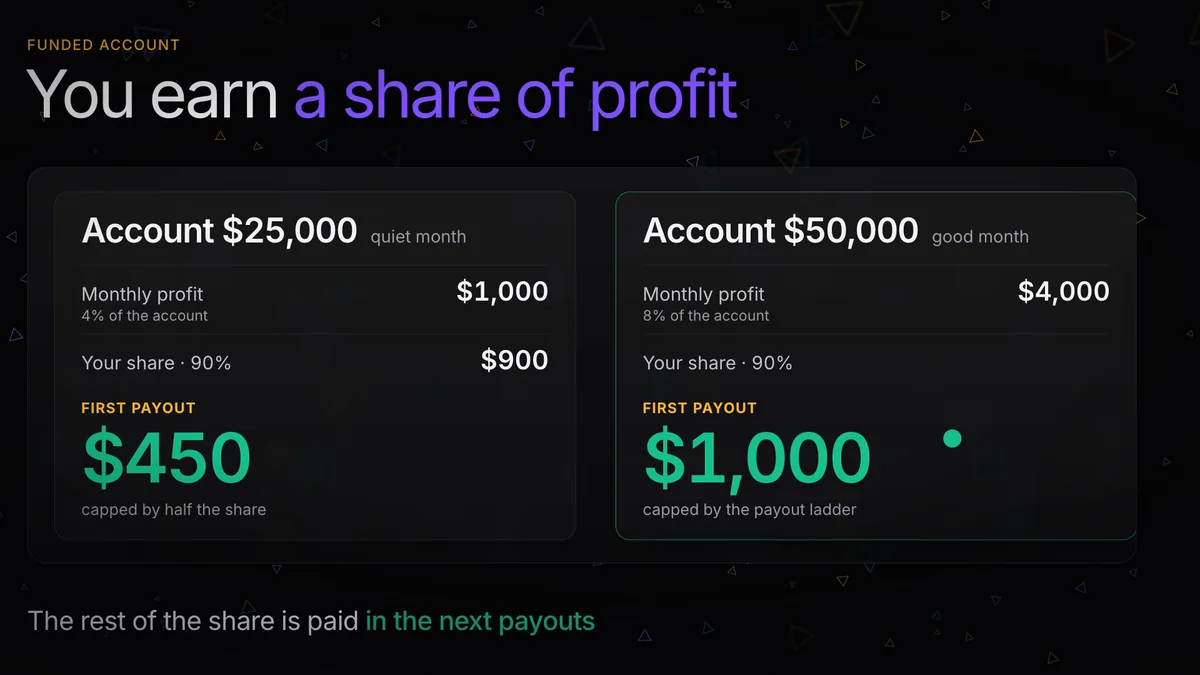
- Payouts. Profit on the funded account is split between you and the firm, with the larger part going to you.
At Prop Hub accounts range from $1,000 to $50,000, fees start at $30, and funded traders keep up to 90% of the profit. Current plans:
| Account size | Fee | Profit target | Min. equity | Daily limit | Per-outcome limit |
|---|---|---|---|---|---|
| $1,000 | $30 | $1,300 (+30%) | $800 (−20%) | −$100 (−10%) | $50 (5%) |
| $10,000 | $125 | $13,000 (+30%) | $8,000 (−20%) | −$1,000 (−10%) | $500 (5%) |
| $25,000 | $300 | $32,500 (+30%) | $20,000 (−20%) | −$2,500 (−10%) | $1,250 (5%) |
| $50,000 | $500 | $65,000 (+30%) | $40,000 (−20%) | −$5,000 (−10%) | $2,500 (5%) |
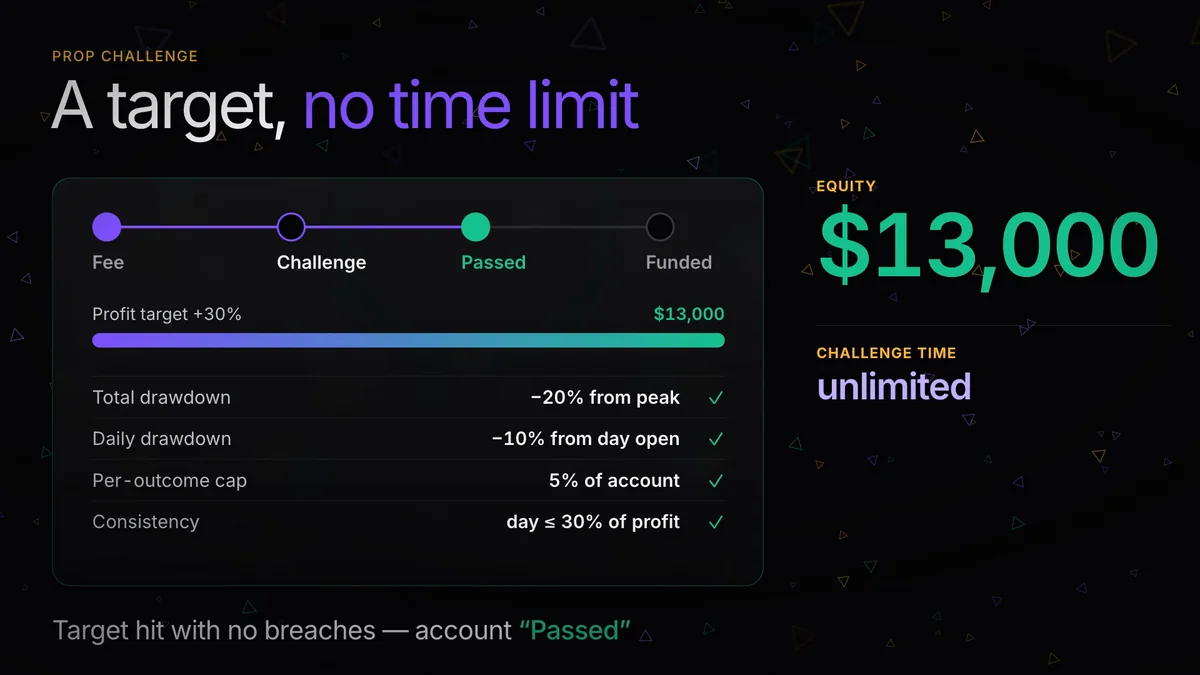
The fee is paid once, with no subscription. There is no deadline either: the challenge rewards discipline, not speed.
Why the rules exist
A challenge without rules would measure nothing. One large position can make +30% in an evening, and that tells you about luck, not skill. The rules filter it out:
- profit target: +30% on the starting balance;
- total drawdown: equity must not fall 20% below its peak;
- daily drawdown: no more than −10% from equity at the start of the UTC day;
- per-outcome limit: at most 5% of the starting balance in a single outcome, counting all your positions in it together;
- consistency: your best day is no more than 30% of total profit;
- activity: at least one trade every 14 days.
Each rule is broken down with numbers in Prop challenge rules and in the Help Center.
How a prop firm makes money
A firm has two revenue streams: challenge fees and its share of funded traders’ profit. Not everyone passes, so for most firms fees are the bigger part. Think of it as a paid exam: you pay for the chance to show a result, and nobody sells guaranteed income.
That model tells you what to look for. An honest firm wants strong traders to pass and withdraw, because their profit share is the other half of the business. Warning signs are vague rules, payout conditions buried in fine print and delayed payouts with no explanation.
Prop firm vs broker
A broker executes trades with your own money and earns on fees. Your losses are capped only by the size of your deposit.
A prop firm does not take your money under management. Your maximum risk is the challenge fee. Break a rule and the account closes; you never owe the firm anything.
At most online firms, Prop Hub included, both the challenge and the funded account run as a simulation on live market prices. Orders don’t go to an exchange, while profit payouts are real money.
Prop trading on prediction markets
Most prop firms work with forex, futures or crypto. Prop Hub follows the same model, but you trade event outcomes from Polymarket: sports and esports, short crypto up/down windows, macro releases, politics.
An outcome’s price sits between $0 and $1 and reads as a probability. Buy “Yes” at $0.40: if the event happens, each share is worth $1; if not, it’s worth $0. Prices, order books and results come from Polymarket in real time. Only events that resolve within 2 days are tradable, so you see the outcome of a trade quickly.
You don’t need a wallet, crypto or a Polymarket account. You trade virtual capital against live quotes.
What the trader risks
The fee is not refunded if you break a rule. Most people don’t pass on the first try, and the usual reason is the daily drawdown: several open positions going against you at the same time.
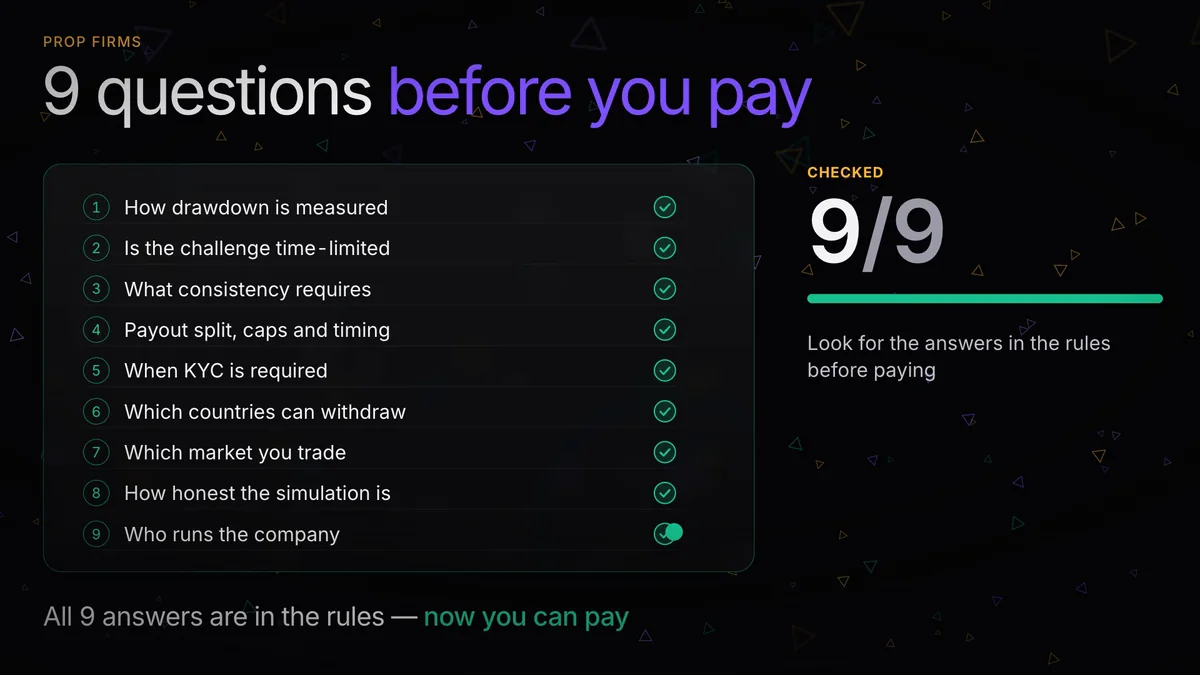
A sensible order of steps: learn the rules on a free account, choose a size where the limits feel comfortable, and only then pay. You can start without risk on the free $100 welcome account, which opens right after sign-up.