 Emmy
There are only a few ways to make money on Polymarket, and all of Polymarket’s own ones start the same way: you put your money into a wallet and then into the market. A prop account is the one route where the trading capital isn’t yours. Below is each way, what it really requires and what you can lose, with no promises of income.
The ways to make money on Polymarket
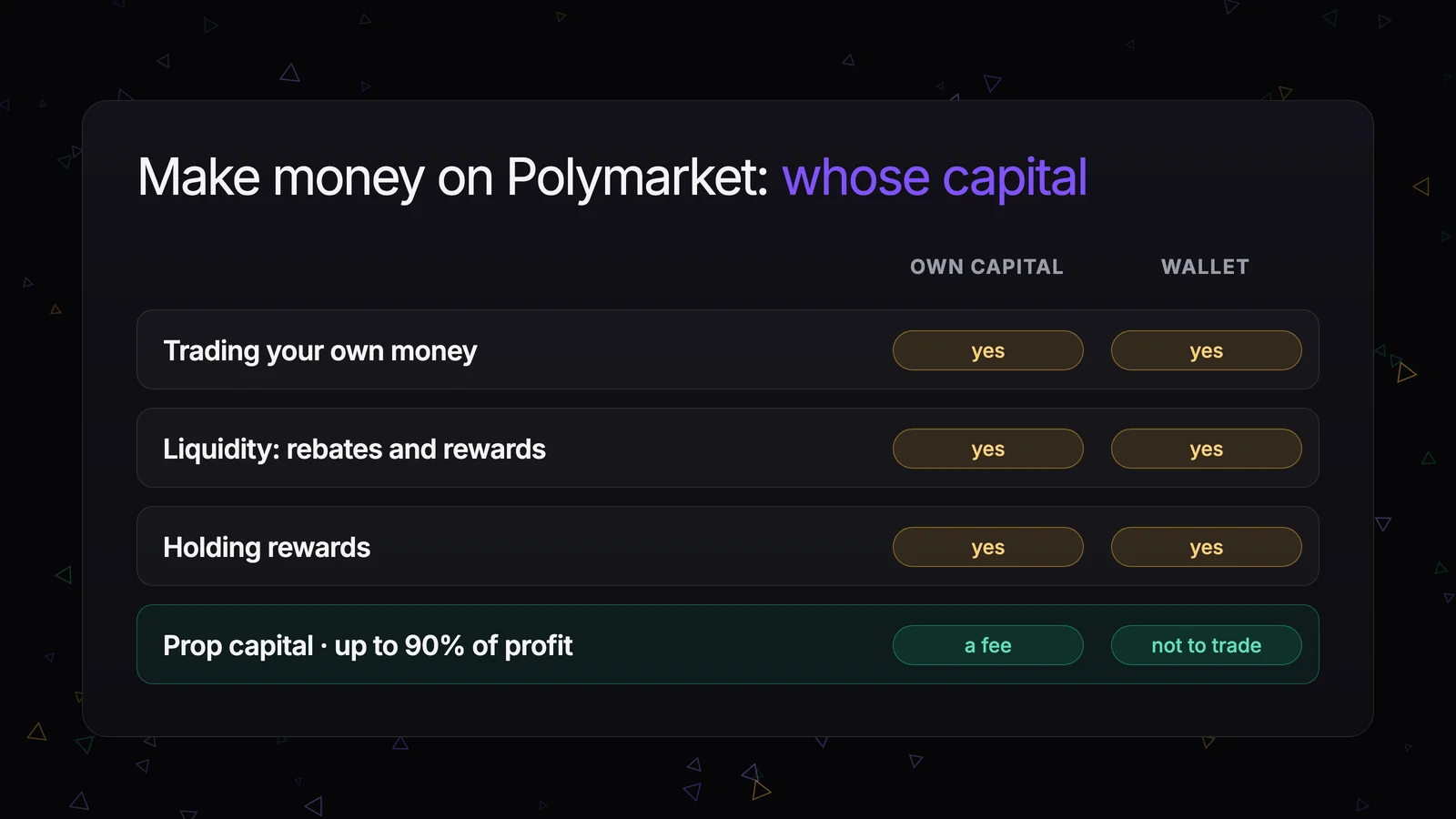
| Way | Your own capital | Crypto wallet | Where the money comes from |
|---|---|---|---|
| Trading your own money | yes | yes | buying an outcome below what it ends up being worth |
| Maker rebates and liquidity rewards | yes, sitting in your orders | yes | Polymarket’s payouts to liquidity providers, plus the spread |
| Holding rewards | yes | yes | an annual rate on positions in a short list of markets |
| Prop capital (Prop Hub) | a one-time fee | not for trading | up to 90% of the profit on a funded account |
Trading with your own money
This is the main way. An outcome share pays $1 if it happens and $0 if it doesn’t, so the price is the market’s estimate of the probability. Profit comes from buying an outcome for less than it turns out to be worth, either at settlement or by selling after the price has moved your way. How prices and settlement work is explained in what Polymarket is.
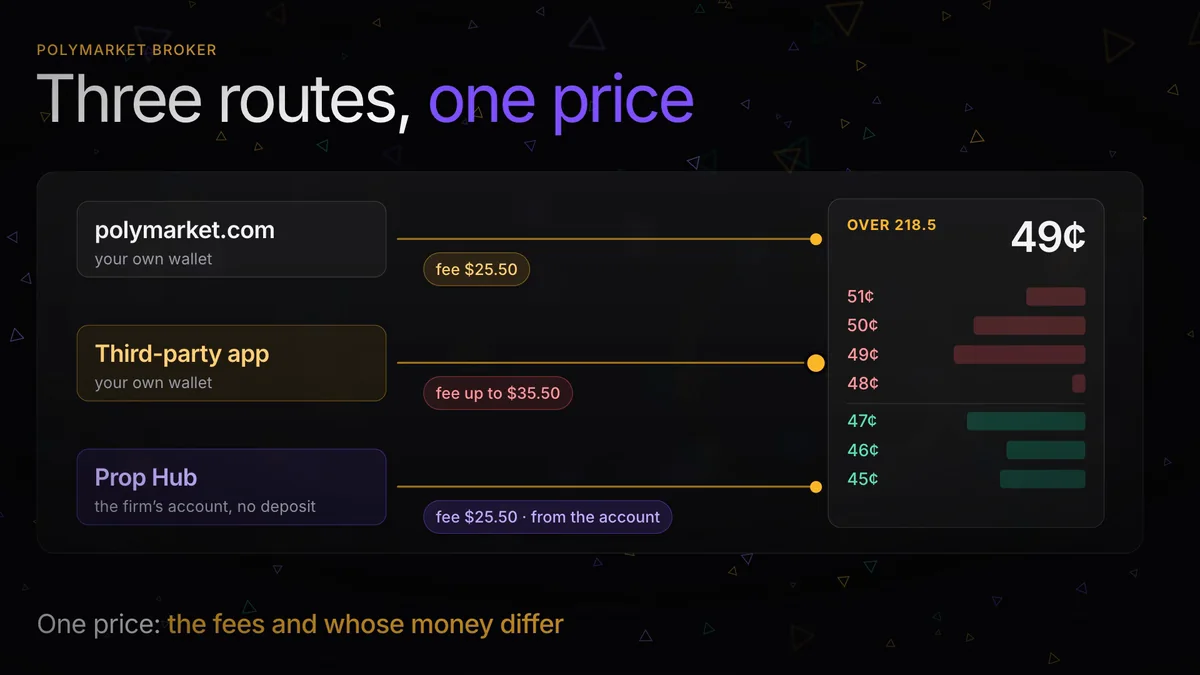
A live example from November 1, 2026: in “Will the price of Bitcoin be above $78,000 on November 2?” Yes was offered at 51¢. If Bitcoin closes above the level, each share pays $1, a 49¢ gain; if not, it pays nothing and 51¢ is lost. On top of that, the taker pays the market’s fee: at a rate of 0.07 that’s 0.07 × 0.51 × 0.49, or about 1.7¢ per share.
At 51¢ the market prices the outcome at roughly a coin flip. You make money over many trades only if you are right more often than the price implies, by more than the fee. Being right “about half the time” on positions priced at 50¢ is a slow loss.
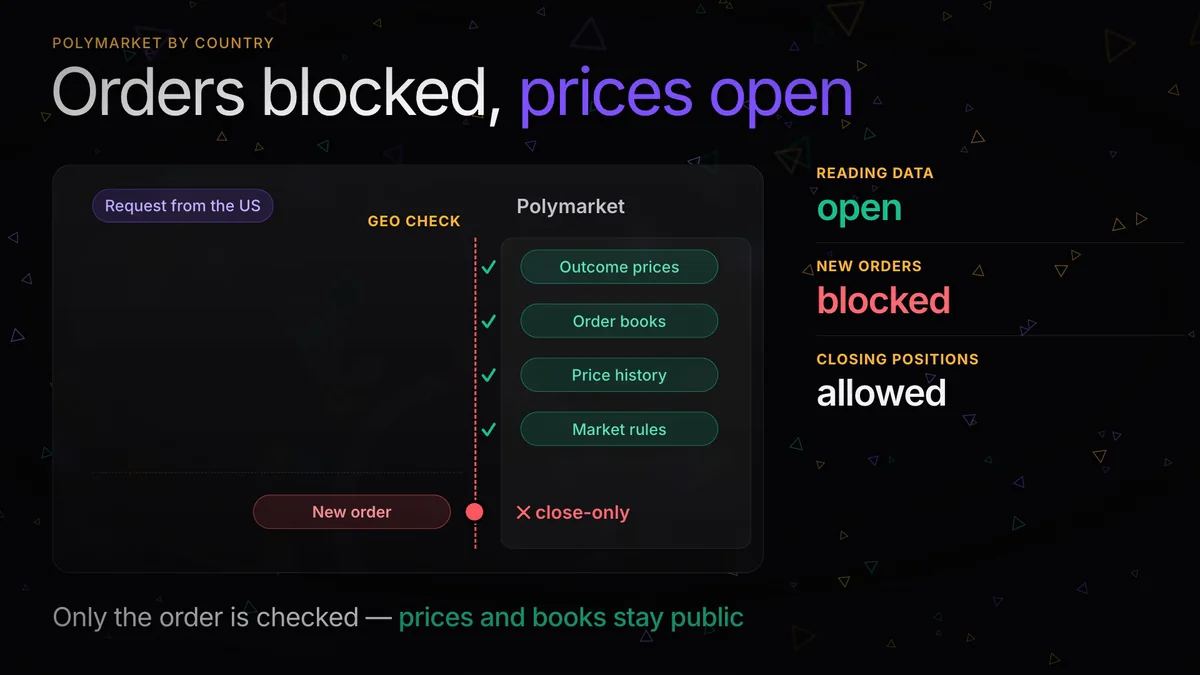
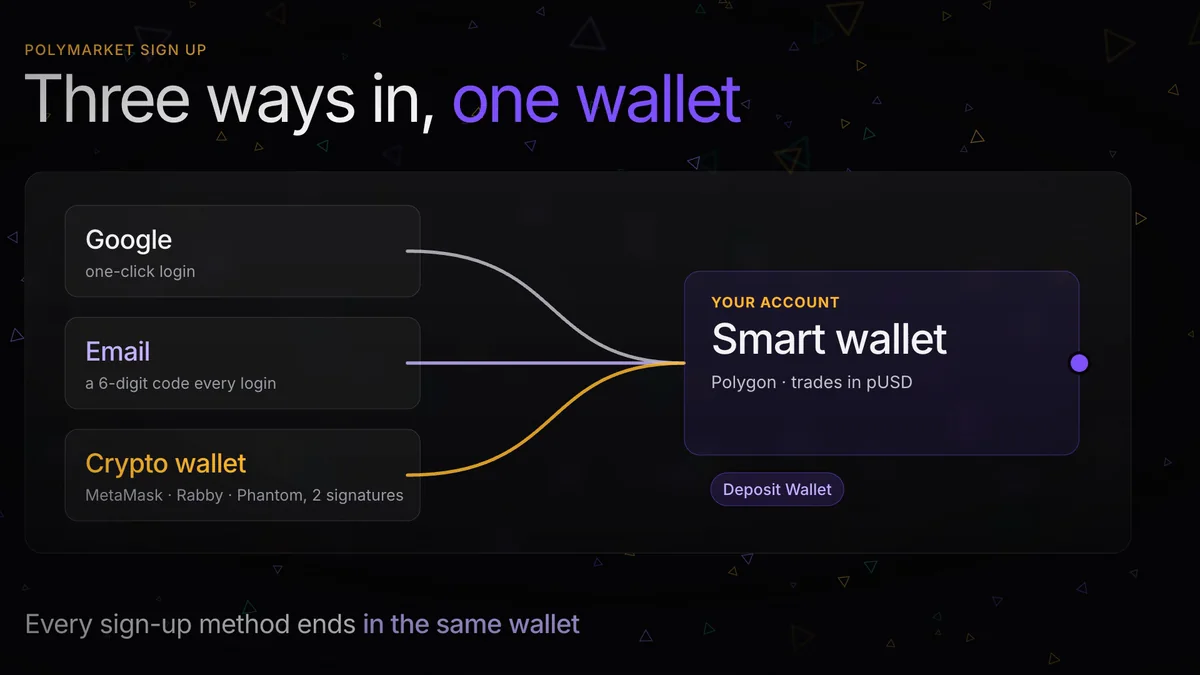
What it takes: a crypto wallet, a deposit in USDC (Polymarket converts it into pUSD, its own token on Polygon), and access from a country where Polymarket accepts trades. The international site is closed to new trades from a number of countries; the list is in where Polymarket is restricted. The risk is the full amount of each position.
Providing liquidity: maker rebates and liquidity rewards
On Polymarket only the taker, the side that removes an order from the book, pays a fee. According to Polymarket’s documentation as of November 2026, part of those fees goes back to makers whose orders were filled. These maker rebates are paid daily in pUSD, once at least $1 has accrued.
A separate liquidity rewards program pays for orders that simply rest near the midpoint. Each market in the program sets a maximum distance from the midpoint and a minimum order size. Orders are scored every minute, closer orders score more, quoting both sides scores better than one side, and rewards go out once a day at about midnight UTC, again with a $1 minimum.
In practice this is the most technical way to earn on Polymarket. Quotes have to stay in the book all day, many makers run automated systems that requote in milliseconds, and the main risk is inventory: news breaks, someone takes your stale order, and you are left holding the wrong side. How makers work is covered in Polymarket liquidity.
Holding rewards
Polymarket also pays an annualized reward on the value of positions in selected long-dated markets, such as presidential elections. Position value is sampled hourly and the reward is paid daily. Polymarket’s help center put it at 3.25% a year as of June 1, 2026; the rate is variable and Polymarket can change it. The reward doesn’t protect the position itself, which can still fall to zero.
Prop capital: trading Polymarket markets on a firm’s account
Prop Hub is a prop firm for prediction markets. You trade virtual capital on live Polymarket prices: orders fill against the real order book at Polymarket’s fee, and positions settle on Polymarket’s result. Prop Hub isn’t part of Polymarket and doesn’t send orders there.
The route:
- Free start. At sign-up you get a $100 welcome account for 3 days, whose profit can be withdrawn once, up to $100. There’s also a $10,000 demo account with no time limit and no payout, described in the Polymarket demo account.
- Challenge. A one-time fee for an evaluation account: from $30 for $1,000 to $500 for $50,000. The target is +30%, with equity no more than 20% below its peak and a daily loss of no more than 10%. There’s no time limit.
- Funded account. After review you get a new account of the same size and withdraw up to 90% of qualifying profit in USDT or USDC, after identity verification. Payouts are at least 7 days apart, with a cap per payout: $1,000, then $2,000, then $5,000.
The difference from the other ways is what you can lose. On a $10,000 challenge the most you can lose is the $125 fee, and a drawdown that closes the account takes nothing beyond it. The fee isn’t refunded if you don’t pass.
What a funded trader actually takes home depends on profit, not account size. The math, with examples, is in how much funded traders make, and the payout rules are in funded account payouts.
Realistic expectations
- No route guarantees income. Prices are already the crowd’s estimate, so profit comes only from being right more often than the market, and that takes time to show up.
- Costs are always there. On Prop Hub the fee averages about 3.2% of the trade amount; a thin book adds slippage on top. A strategy that is barely positive before fees is negative after them.
- Rules cut losses but also end accounts. On a challenge the daily and total drawdown limits close the account. That caps the loss at the fee, but the attempt is over.
- Liquidity programs reward scale and speed. A few hundred dollars of quotes placed by hand rarely compete with automated makers.
Where to start
- Open the welcome account and make your first trades on the markets you know best.
- Use the demo to test a method at challenge scale and look at the result after fees.
- Buy a challenge only when the method holds over dozens of trades, at the size you trust. Every step is described in how Prop Hub works.